Why we choose to work with charities and non-profits

We thought we’d give a little bit of insight into why we choose to work mainly with charities and non-profit organisations: to demonstrate our experience and expertise in this area, as well as giving a bit of advice for charities when thinking about undertaking an update or new build for their website.
TLDR: This is an insight into why we work with charities and non-profits, and how they can approach making changes to their websites successfully.
Q: What led you to choosing to position The Idea Bureau as an agency that focuses on working with charities and non-profits?
We’ve each had personal examples of working with charities. Once we’d established ourselves as The Idea Bureau, we decided to pool our knowledge and provide our skills for the causes we care about, and to continue serving the charity sector out of our collective experiences.
As we progressed with this work, we discovered the high quality of the work we created for our charity partners led to lots of word-of-mouth referrals. The charity sector has been incredibly collaborative and supportive in this way. There have been plenty of organisations seeking improvements to their communication tools, such as resource centres, interactive mapping solutions, data visualisations and their overall websites, and we’ve been happy to provide our services for them.
We’re very grateful that we’ve been able to build a name for ourselves in the sector, and are so proud of the work we’ve done and the clients we serve. It’s something that’s evolved organically over time, as our experience has grown in this space. Being a remote company has also been an advantage, as we’re not limited by location, and as such, have had the opportunity to work with many organisations around the world.
Q: What work did you do for your first clients?
One of our first clients was Girls Not Brides – a civil society organisation working towards the goal of ending child marriage. We began working with them when they first started out. They asked us to overhaul their content architecture to create a brand new website the team could have ownership over. We wanted to empower them to take control of their site to make the most of events and trends relevant to their mission.
At a time when they weren’t particularly common, we created a resource library that helped establish them as an expert in their field. Subsequently, we created the Girls Not Brides Child Marriage Atlas, a data visualisation tool that demonstrates the state of child marriage across the globe using a range of factors. With data provided by UNICEF, the tool continues to be an important part of the organisation’s communications.

Q: What do you like most about working with charitable and non-profit organisations?
One of the things we like most about this sector is that the teams we work with are incredibly passionate about their causes – we’re just as passionate about creating digital solutions to assist them in these causes. It’s inspiring and we get to learn so much through our collaboration together. This work has enabled us to build up extensive knowledge within the charity field.
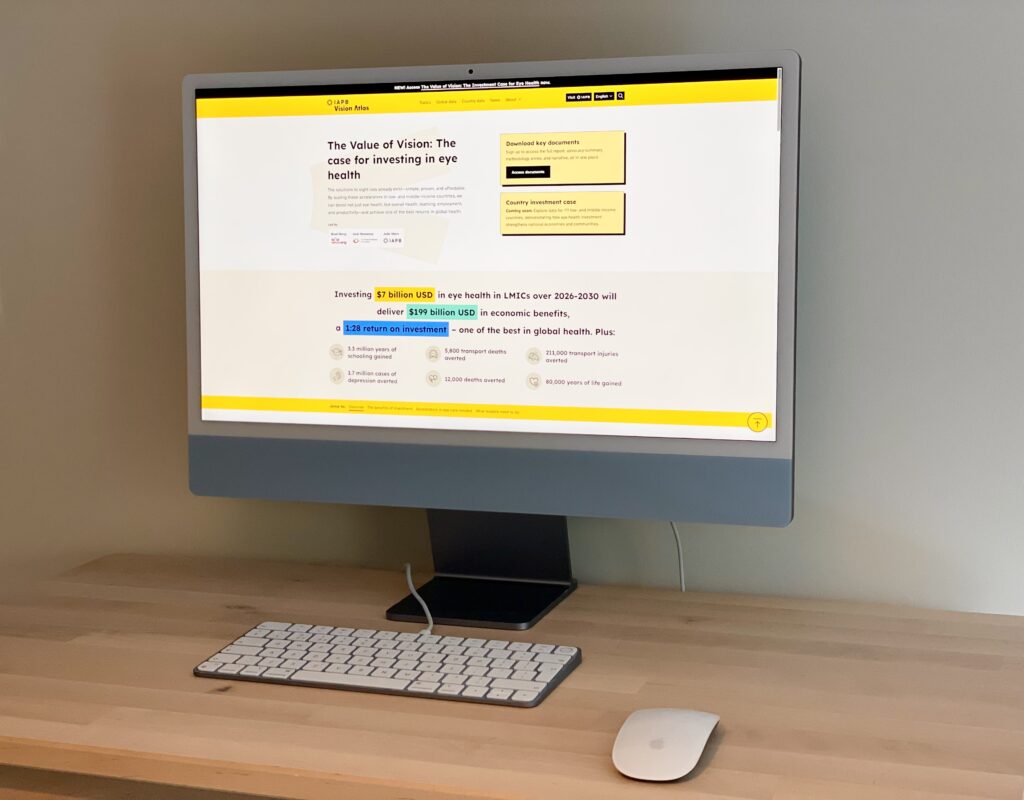
We’ve worked with some incredible organisations, including the International Agency for the Prevention of Blindness (IAPB), United Nations, National Children’s Bureau and the Consortium for Street Children, and this has helped us in moving projects forward, as we’re keenly aware of how charities function.
It’s really rewarding to use our skills to create solutions for these amazing causes – some of the things we’ve worked on include:
- Vision loss – with the International Agency for the Prevention of Blindness and L V Prasad Eye Institute
- Social political peacekeeping – with the United Nations
- on needs – with the National Children’s Bureau
- Financial transparency – with Open Contracting Partnership
- Children’s rights – with Consortium for Street Children
Working within constraints
There are different constraints, challenges and opportunities compared to working with for-profit clients, for example: different budget requirements – e.g. a minimum or maximum spend, matching budget commitments between funders and the client, or funding deadlines to fit with funding application windows – as well as political considerations, like remaining impartial with our design choices, so as not to infer judgement.
These push us further with idea generation, and provides an opportunity for us to delivery something valuable and unique to the organisation and their needs.
Time and resources – e.g. number of team members or the amount of time they can spare – also have an impact. While the majority of the website creation work is on our side as the service providers, there are also requirements from clients, too. One of these things is content creation, an aspect that can often be underestimated in the amount of time it takes to prepare. We set these expectations as part of our discovery at the beginning of the project, but it’s imperative we have the finalised content that’ll be featured on the website to work best with a content-first approach.
We’re used to working with what we’re given, but that just makes the challenge all the more exciting. It’s helped us to create innovative solutions that we consider a huge privilege to have been a part of. Charities and non-profits typically have a unique history and fantastic story to share; we want to showcase these, along with their emotive and impactful success stories, so more people can engage with them.

Q: What key things do most charities and non-profits miss when it comes to creating or updating their websites?
Complicated admin experience
Quite often, a charitable or non-profit organisation’s resources and time can be stretched: they have to do a lot with little, which is amazing, considering the work they produce. However, the way their websites function can be needlessly complex (a fault of whoever built it for them in the first place); similarly, if the website is old, the user experience can become outdated and no longer fit with their vision. If this happens, it usually means the website isn’t empowering teams to easily update them or create new content. This is why websites become outdated and no longer meet the organisation’s needs, and can have a detrimental impact on donations and funding, as well as other marketing outcomes.
In our experience, charities have a lot of really great content available to them; they just might not be able to make the best of it because of their website’s capabilities or the way it’s been built. We’ve found there comes a time when the wider organisation’s strategy moves forward, but their website doesn’t; as such, their website doesn’t reflect the current organisation, which can have a knock on effect on the user journey and content structure.
Business continuity
Another aspect that can affect the efficacy of a charity’s website is the business continuity. We’ve written a bit about the continuity of knowledge in a previous blog post (plus a further post on password management). Unfortunately, it’s a widely known phenomenon – in any organisation, but particularly in charities/non-profits – that one person in a team holds all of the knowledge and power when it comes to handling digital assets, such as a website, the organisation’s branding guidelines, or domain names. When they move on, the team is then left without any instruction on how to access these important things.
Accessibility
Accessibility is such an important aspect of creating a website. It’s what’s going to create an enjoyable experience for most, but for some users, is vital to being able to engage with your organisation at all. There are some charities that may have created their website with the resources they have available to them internally – it’s not necessarily a skill they’re well versed in, and as such, probably don’t come up to par with accessibility regulations.
This doesn’t mean that web accessibility is something they don’t care about – they’re just not equipped to execute these guidelines properly. Two of our clients, the International Agency for the Prevention of Blindness and L V Prasad Eye Institute, are both organisations that very much rely on the highest levels of accessibility being achieved, as they’re both sight-loss related charities. These aspects of their websites are non-negotiable; therefore, we’ve ensured we have the expertise to help such organisations achieve these levels of accessibility.
Q: What 3 things would you like charities to know about what it’s like to work with you?
- To make the project run as smoothly as possible, we like to embed ourselves in your team – this allows us to understand your goals and challenges on a deeper level. Our initial discovery phase is the beginning of this, as it really allows us to get to know your team, and how you work and think.
- We’re not afraid to challenge ideas or any assumptions, or to suggest a new direction – if needed – in the pursuit of creating the best end product for your organisation.
- We go above and beyond to deliver the most high quality work we can that’ll work not only for your end users, but your digital comms or marketing team, as well.
Part of working with us means we can take our years of experience of working with other charities and non-profit organisations and use that knowledge to help lead things, if you’re finding you’re a bit stuck.
We’re also open to adapting our ways of working – we’re pretty flexible and adaptable, and can pivot if we need to if changes in the charity/non-profit landscape (or in the wider world, such as when the pandemic happened!) come up.
Q: What key things do you think charities should know when beginning to work on their website?
- Get to know your audience: you can do this through researching those following your social media channels, undertaking surveys with your newsletter readership, and generally asking questions of those you interact with (e.g. donors, fundraisers).
- Create a clear mission statement that tells people who you are and what you do – share this in your marketing media and online; this will really let people hook into your work and come along for the journey.
- Really get to grips with your organisation’s mission, values and direction early on in the process of deciding what you need. It’s a good idea to onboard your team with this, too, as it’s always good to have a refresher and make sure they’ve bought into these things (and great for demonstrating to new starters, too).
- Put a clear strategy in place that you review and iterate on regularly – keep checking back with it to make sure the work you do with your website and digital presence are aligned with this. Use it as your guiding principles that you live every day.

We know the people we work with are experts in their field. We’re experts in our area, too, so we’re well placed to pool our collective knowledge to build something great.
Is your charity looking to strengthen its strategy and online presence? We can help with that – we love having conversations with interesting charities, not-for-profits and NGOs who want to improve or start their digital journey. Our free 30 minute discovery calls let us have a chat and to work together to really understand the problems and opportunities you’re facing. Why not get in touch to see what we can do for you? >
